One Shell Per Context, Not One Shell Per Person

Clarifying the CAS Shell Metaphor
The core metaphor of CAS — Context Architecture System — is simple:
The model is the body.
The context is the shell.
As AI models, agents, and tools change, the user's context should not have to be rebuilt from scratch every time.
That is the meaning behind:
One Shell. Any Body. Forever.
But this phrase deserves an important clarification.
CAS does not mean one person only needs one shell.
It means:
One shell per context, not one shell per person.
A person may have many contexts.
A business may have many contexts.
A team may have many contexts.
A creator may have many contexts.
A consultant may have many client contexts.
A teacher may have many learning contexts.
Each of those contexts can have its own shell.
The shell is not the person.
The shell is the structured container for a specific body of work.

One Shell Per Context
Not one shell per person.
What a Shell Really Is
A CAS shell is a portable context structure.
It can contain:
- identity
- purpose
- rules
- workflows
- project history
- decisions
- reference material
- prompts
- memory
- constraints
- instructions
- session summaries
- tool-specific guidance
The shell gives AI systems a stable place to understand the work.
Instead of scattering context across chat threads, apps, documents, prompt libraries, and model memories, CAS gives the context a portable structure that can move across tools.
A shell can be used with ChatGPT.
It can be used with Claude.
It can be used with Cursor.
It can be used with local models.
It can be used with agents.
It can be indexed by RAG.
It can be versioned in Git.
It can be extended by developers.
It can be reused by consultants.
It can become a digital product.
That is why the shell metaphor matters.
A hermit crab can move into different bodies of water, different habitats, different environments, and eventually different biological stages, but the shell remains the protective structure it carries.
In CAS, the shell is the continuity layer.

The Context Remains. The Model Changes.
Why One Person May Need Many Shells
A human being is not one workflow.
A business owner is not one context.
A creator is not one project.
A consultant is not one client.
A developer is not one codebase.
Each domain of work has different rules, language, goals, risks, and memory.
If everything is forced into one giant context, the context becomes noisy. It becomes expensive to load. It becomes harder for AI to understand what matters. It becomes less modular, less portable, and less useful.
CAS works better when shells are organized around actual contexts.
A shell should be clear enough that an AI tool can ask:
What kind of work am I inside right now?
That answer should be obvious.
A book-writing shell should not carry the same operational assumptions as a contractor growth shell.
A client project shell should not mix with a personal spiritual study shell.
A marketing engine shell should not contain every unrelated life note, codebase, and business idea.
The power of CAS is not one giant universal prompt.
The power of CAS is structured, portable, purpose-specific context.

Many Shells. Any Model.
Examples of Context Shells
A person or business may have many shells. Here are examples.
Business Operations Shell
A Business Operations Shell contains the operating context of a business.
It may include:
- company identity
- services
- pricing
- customer types
- internal workflows
- standard operating procedures
- tools and accounts
- policies
- client communication style
- recurring tasks
- automation opportunities
- operational constraints
This shell helps AI tools understand how the business actually runs.
It can support planning, delegation, documentation, process improvement, and operational decision-making.
This is not just "business notes."
It is the portable operational memory of the business.

A Business Should Own Its Operating Context
Marketing Engine Shell
A Marketing Engine Shell contains the marketing system of a business or creator.
It may include:
- brand voice
- offers
- audience segments
- content pillars
- calls to action
- ad angles
- email sequences
- social media rules
- blog topics
- testimonials
- SEO keywords
- landing page strategy
- campaign history
- performance notes
This shell helps AI tools generate marketing that is consistent with the actual business.
It prevents the common AI marketing problem:
Every post sounds different.
Every tool needs the brand re-explained.
Every new campaign starts from scratch.
With a Marketing Engine Shell, the brand context becomes portable and reusable.

Stop Re-Explaining Your Brand to Every AI Tool
Book Writing Shell
A Book Writing Shell contains the creative and structural context of a book project.
It may include:
- premise
- themes
- audience
- chapter outline
- tone
- voice
- research notes
- character notes
- argument structure
- drafts
- revision rules
- publishing plan
- continuity notes
This shell helps the writer preserve the soul of the book across many writing sessions and tools.
A book does not need to live only inside a single chat thread.
A book can have its own shell.
That shell can travel between brainstorming, drafting, editing, marketing, publishing, and adaptation.

A Book Can Have a Shell
Tarot Reading Shell
A Tarot Reading Shell contains the interpretive system and ethical boundaries of a tarot practice.
It may include:
- deck system
- card meanings
- spread structures
- reading style
- client boundaries
- tone
- disclaimers
- ethics
- journaling prompts
- archetypal frameworks
- spiritual and philosophical assumptions
- integration questions
This shell does not turn AI into a spiritual authority.
It creates a structured companion for reflection, study, and interpretation.
The practitioner remains responsible.
The shell helps preserve method, language, boundaries, and consistency.

Spiritual Tools Need Boundaries Too
Contractor Growth Shell
A Contractor Growth Shell contains the marketing and lead-flow context for a local contractor or remodeler.
It may include:
- services
- service areas
- customer pain points
- before/after project notes
- FAQs
- estimate request flow
- follow-up messages
- review request process
- blog topics
- local SEO structure
- seasonal campaigns
- bid preparation notes
This is where CAS becomes very practical.
A contractor does not need abstract AI theory.
A contractor needs:
- better leads
- better follow-up
- better content
- better estimates
- better organization
- fewer missed opportunities
A Contractor Growth Shell can help turn scattered business knowledge into a repeatable marketing and operations system.

From Website to Growth System
CAS Vibe Coding Shell
A CAS Vibe Coding Shell is for people building with AI coding tools.
It may include:
- project vision
- architecture
- tech stack
- coding rules
- file structure
- agent instructions
- known bugs
- decisions
- session summaries
- prompt patterns
- deployment notes
- testing rules
- handoff notes
This shell helps solve one of the biggest problems in AI-assisted coding:
The project context keeps getting lost.
A builder may use ChatGPT for product thinking, Claude for architecture, Cursor for code editing, GitHub Copilot for implementation, and a local model for experimentation.
Without a portable shell, each tool sees a fragmented version of the project.
The CAS Vibe Coding Shell gives the project a portable brain.

Stop Re-Prompting. Start Carrying Context.
Marijuana Medicine Ceremony Shell
A Marijuana Medicine Ceremony Shell could turn a book, philosophy, and practice framework into an interactive reading and integration companion.
It may include:
- book context
- chapter summaries
- reflection prompts
- journaling paths
- safety boundaries
- legal disclaimers
- integration questions
- ceremony preparation frameworks
- aftercare prompts
- choose-your-own-reflection pathways
This kind of shell is not a replacement for human judgment, medical care, therapy, or spiritual guidance.
It is a structured companion for lawful adult reflection, reading, journaling, and integration.
This is where the idea of books as interactive products becomes powerful.
A book can become more than static text.
It can become a guided context system.

The Book Becomes an Interactive Shell
Client Project Shell
A Client Project Shell contains the context for a specific client engagement.
It may include:
- client goals
- scope of work
- meeting notes
- decisions
- deliverables
- brand rules
- technical stack
- credentials process
- open issues
- risks
- timelines
- support history
- handoff documentation
This is especially useful for consultants and agencies.
Every client project has its own memory.
Without structure, that memory becomes scattered across emails, chats, docs, task tools, and private notes.
A Client Project Shell gives the engagement a portable structure.
It also supports continuity if tools, contractors, assistants, or AI systems change.

Every Client Deserves a Clean Context Boundary
Learning Shell
A Learning Shell contains the context for studying a subject.
It may include:
- learning goals
- current level
- curriculum
- vocabulary
- exercises
- notes
- misconceptions
- practice history
- review schedule
- examples
- preferred learning style
- assessment prompts
A Learning Shell helps AI tutors become more consistent.
Instead of starting from zero every session, the learner carries their study context.
This could apply to:
- programming
- language learning
- mathematics
- history
- spiritual study
- professional certification
- music
- writing
- business skills
The shell becomes the learner's portable study companion.

Your Tutor Should Remember the Journey
Agent Workflow Shell
An Agent Workflow Shell contains the operating context for one or more AI agents.
It may include:
- agent roles
- task boundaries
- tool permissions
- workflow steps
- input/output formats
- memory rules
- escalation rules
- approval checkpoints
- safety constraints
- logs
- evaluation criteria
- integration instructions
This matters because agents need more than autonomy.
They need context, boundaries, and structure.
A good Agent Workflow Shell can help an agent system become more reliable, inspectable, modular, and safe.
It can also make workflows portable across agent frameworks and model providers.

Agents Need Shells Too
Shells as Digital Products
This is where the commercial opportunity becomes clear.
If a shell can contain the reusable context for a workflow, project, book, practice, business system, or agent process, then shells become a new kind of digital product.
A shell is not just a prompt pack.
A shell can include:
- prompt cards
- instructions
- folder structures
- workflows
- examples
- templates
- checklists
- policies
- safety boundaries
- product knowledge
- session patterns
- implementation guides
- agent configuration files
- reusable project memory
That means creators, consultants, developers, educators, and businesses can build shells for specific use cases.
They can sell them.
They can give them away.
They can use them with clients.
They can build services around them.
They can build tools that extend them.
They can create marketplaces around them.
This is why CAS is published as open infrastructure.
The point is not to trap everyone inside one company's platform.
The point is to make context portable, useful, and commercially extensible.
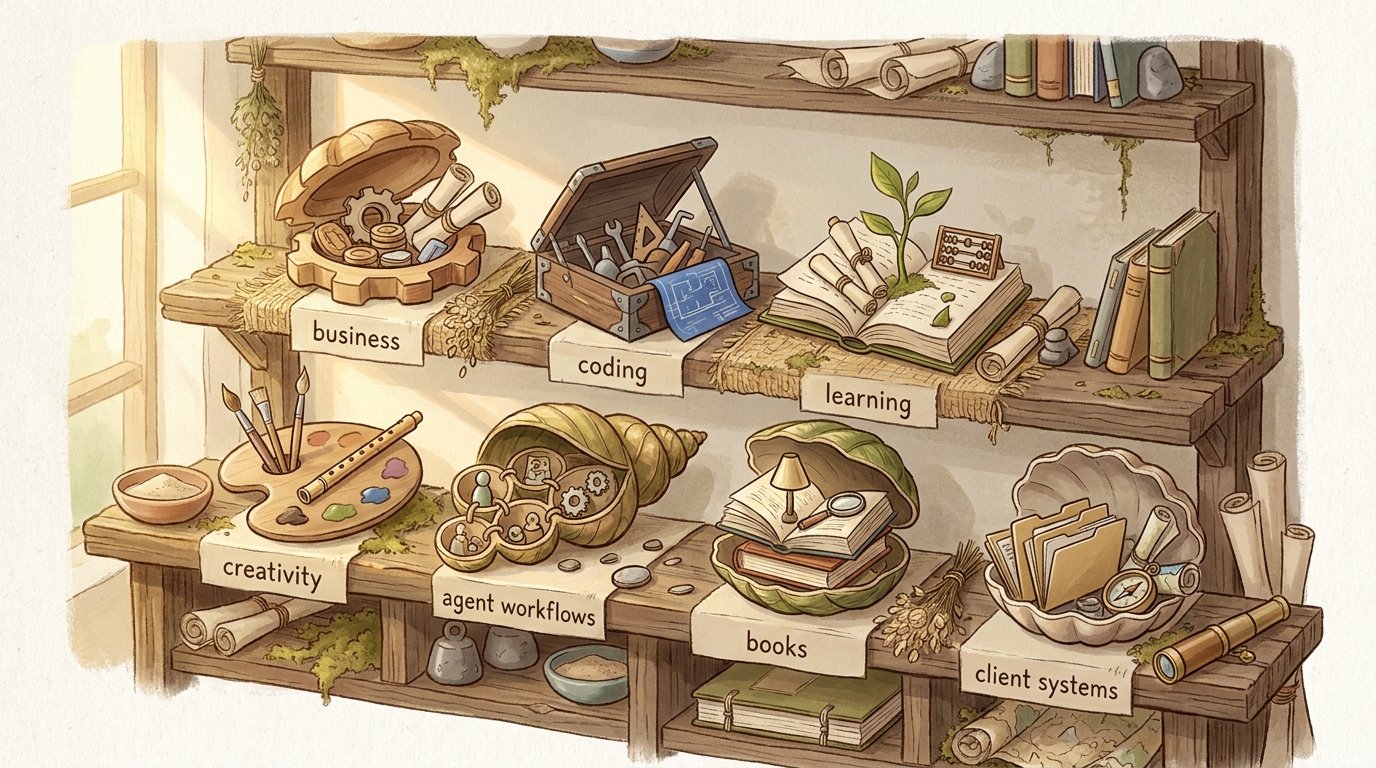
Shells Are a New Digital Product Format
Why Apache 2.0 Matters
CAS is intended to be open and commercially extensible.
That is why the open-source layer is published under Apache 2.0.
Developers and builders should be able to:
- use CAS commercially
- extend it
- build tools around it
- integrate it into products
- use it with clients
- create compatible shells
- sell services
- create training
- build certified workflows later
Commercial use is not a loophole.
Commercial use is part of the design.
The more useful shells, tools, and services that exist around CAS, the more valuable the ecosystem becomes.

Commercial Extension Is the Point
The Principle Behind Many Shells
The reason to have many shells is not to create clutter.
The reason is to preserve context boundaries.
A shell should be specific enough to be useful.
A shell should know what kind of work it is holding.
A shell should protect context from becoming too vague, too huge, too noisy, or too dependent on one model.
This supports the core CAS principles:
- user ownership
- portability
- model freedom
- vendor neutrality
- interoperability
- human agency
- transparency
- modularity
- practical usefulness
- ethical adoption
Many shells does not weaken the metaphor.
It strengthens it.
A good shell is not universal because it contains everything.
A good shell is universal because it can move anywhere.
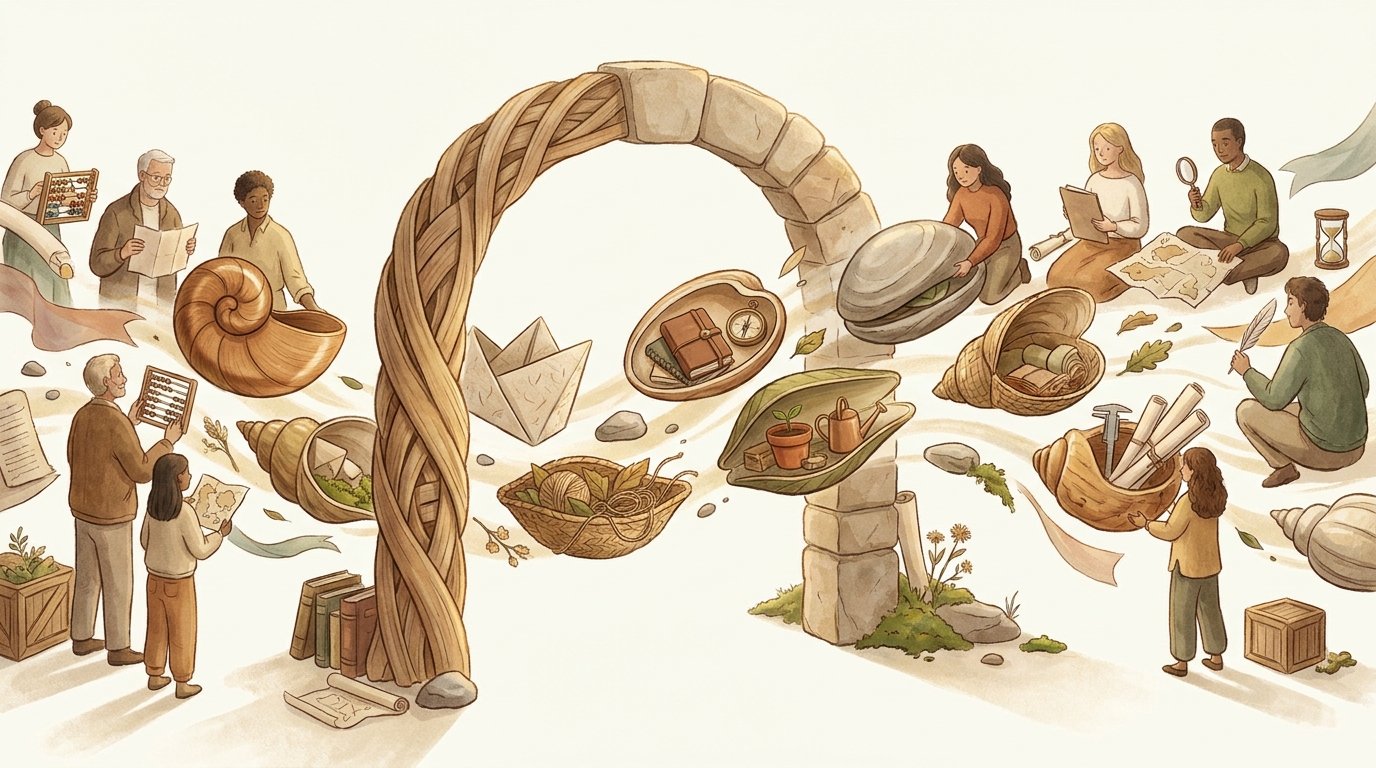
Specific Context. Portable Structure.
The Correct Mental Model
The phrase:
One Shell. Any Body. Forever.
does not mean:
"One person should only have one shell."
It means:
"For a given context, the shell should outlive the model."
A better expanded version is:
One shell per context. Any model you choose.
Or:
Many shells. Any model.
Or:
A shell for every context you want to carry.
The core metaphor remains.
The commercial model becomes clearer.
The user can own a library of shells.
A business can operate from a collection of shells.
A consultant can maintain separate shells for different clients.
A creator can sell shells for different experiences.
A developer can build tools that index, search, transform, and orchestrate shells.
A learner can keep different shells for different subjects.
An agent system can use different shells for different workflows.
That is the shell layer.
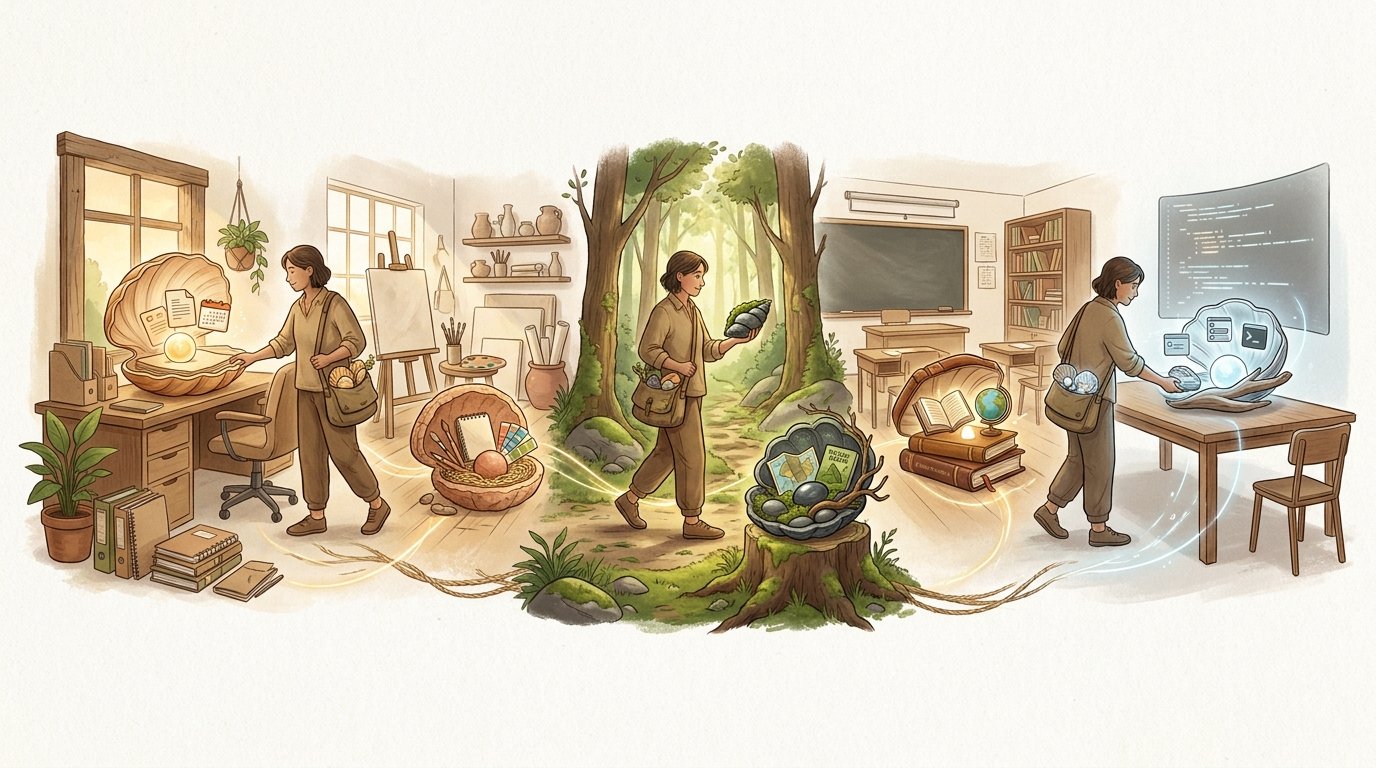
One Shell Per Context. Many Shells Per Life.
Invitation
CAS is early.
The standard needs testing.
The templates need refinement.
The tooling needs contributors.
The marketplace needs examples.
The shell ecosystem needs builders.
If you are a developer, consultant, AI builder, workflow architect, educator, creator, or business owner, I invite you to experiment with the shell model.
Create a shell for one real context.
Use it with one real project.
Load it into different AI tools.
End each session by saving what happened.
See what the shell remembers.
See where it helps.
See where it breaks.
Then improve it.
That is how open infrastructure becomes real.

Build the Shell Layer
Closing
The future of AI will not only be about better models.
It will be about better context.
And that context should belong to the people and businesses who create it.
A person may have many shells.
A business may have many shells.
A community may have many shells.
A marketplace may contain many shells.
But each shell should preserve the same promise:
The context is portable.
The user remains sovereign.
The model can change.
The work can continue.
One shell per context.
Many shells across a life, business, or ecosystem.
Any model. Any agent. Any future body.
One Shell. Any Body. Forever.